Wild mushroom poisonings persist across California
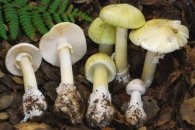 “Death Cap” mushrooms.
The California Poison Control System warns that a deadly outbreak of wild mushroom poisonings that began in Northern California continues with cases diagnosed across multiple California counties, and toxic mushrooms still being identified statewide according to mycological experts. In the last three weeks, eight more cases of toxic wild mushroom exposures have been reported.
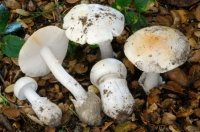 Western Destroying Angel mushrooms.
“Since November 2025, 47 people have been hospitalized because of eating foraged wild mushrooms, four happened just over the past weekend,” said Dr. Craig Smollin, Professor of Emergency Medicine at UCSF Medical Center and Medical Director for the San Francisco Division of CPCS. “Three of the new cases were from foraging mushrooms in Napa and one was from Monterey. Overall, four of the patients developed severe liver failure and required liver transplants. Sadly, four other patients have died. The patients range in age from 19 months to 56 years old.”
The poisonings have been linked to both Amanita phalloides, more commonly called the “death cap” mushroom, and Amanita ocreata, known as the “Destroying Angel” mushroom. Easily mistaken for safe mushrooms, both these toxic mushrooms are found abundantly throughout California and should not be foraged or consumed.
CPCS reminds Californians that many diverse cultural communities, some of whom may have traditional practices of foraging mushrooms that resemble deathcaps for cooking, are at risk because of the presence of the toxic mushrooms.
Click here to see a Flowpage developed by CPCS that has consolidated resources and information in both English and Spanish. Additionally information about wild mushrooms and foraging can be found in this poster in Spanish and these video reels available in both English and Spanish.
Communication and education have been a challenge because of the language barriers with other population groups, so CPCS is working with community groups to get the message out on the dangers of foraging and consuming wild mushrooms to all of them, as well.
The California Department of Public Health has developed the Poisonous Wild Mushroom Outbreak Dashboard Live to provide data on this toxic mushroom outbreak and the Poisonous Wild Mushrooms webpage, which has materials in multiple languages to support outreach and education.
The first cases of this outbreak were reported Nov. 18, with the most recent cases reported on May 10. Symptoms of mushroom poisoning typically develop six to 12 hours after eating and range from mild to serious, depending on the amount consumed. Serious symptoms do not always occur immediately after eating and can sometimes surface days or weeks later.
Safety tips
• Do not pick or eat wild mushrooms — it’s too easy to mistake a poisonous one for one that’s edible.
• The safest way to ensure that mushrooms are harmless is to purchase cultivated ones from a grocery store or market.
• Call 911 right away if you suspect mushroom poisoning.
• Call the toll-free Poison Hotline at (800) 222-1222 for professional guidance to proper medical care.
• If you think you or someone else has eaten a wild poisonous mushroom, contact CPCS immediately at (800) 222-1222 for guidance and assistance.
Mushroom poisoning symptoms
• Abdominal pain.
• Cramping.
• Diarrhea.
• Nausea.
• Vomiting.
• Organ failure, including liver damage.
• Death due to eating wild mushrooms is uncommon, but does occur.
To learn more about wild mushrooms, visit the CPCS website.
About CPCS
Call Poison Control at (800) 222-1222 (number is the same in all states) for questions about poison encounters. Trained pharmacists, nurses and other providers are available to help 24 hours a day, seven days a week. The service is free, confidential and interpreters are available. Follow CPCS on Facebook, on YouTube @californiapoisoncontrol, and on X @poisoninfo. Sign up for The California Poison Safety Post, California Poison Control System’s quarterly electronic newsletter, by visiting calpoison.org/newsletters. CPCS is part of the University of California San Francisco School of Pharmacy and is responsible to the California Emergency Medical Services Authority.