CalFire graduates another 38 new company officers at Ione, maintaining record training pace
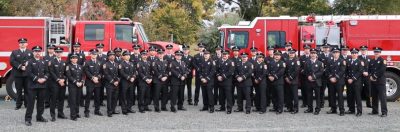
Last week, CalFire celebrated another graduation of 38 new company officers from the Ione Training Center. This ceremony marks the successful completion of the intensive training for Fire Control Class 25-13, preparing the graduates for leadership roles across the state.
Top-level department leadership attended, including Director/Fire Chief Joe Tyler, Chief Deputy Director of Operations Anale Burlew, Fire Marshal Daniel Berlant, and Cooperative Fire Protection Deputy Director Matthew Sully, alongside numerous CalFire Region and Unit Chiefs.
 Joe Tyler.
In delivering his keynote, Director/Fire Chief Tyler acknowledged the achievements of the graduating officers of Fire Control Class 25-13, noting their commitment and the rigorous training they completed.
“My expectation is that you will take the knowledge and skills learned here as the fundamentals,” said Tyler, “and continuously build upon that foundation throughout your careers to meet the evolving demands of our service.”
Setting a new benchmark in training capacity
With the graduation of Fire Control Class 25-13, CalFire has now trained more than 615 new company officers in 2025. This robust training schedule is on track to surpass the goal of graduating more than 650 company officers by the end of the year, setting a new record for the CalFire Training Program.
This expanded capacity was made possible, in part, by the addition of the Atwater Training Center in July 2025 — the department’s fourth training location — which held its inaugural graduation ceremony Oct. 24, 2025.
The critical role of the company officer
The CalFire company officer serves as the vital first-line supervisor and tactical field leader. Graduates from this standardized academy are now prepared to assume command and management responsibilities, directing the safe and effective deployment of crews and equipment during emergency incidents.
Beyond active emergencies, company officers are essential during non-emergency periods, leading crucial crew training, ensuring station readiness and directing fire prevention efforts such as defensible space inspections and public education initiatives.
Click here to learn more about the CalFire Training Center.