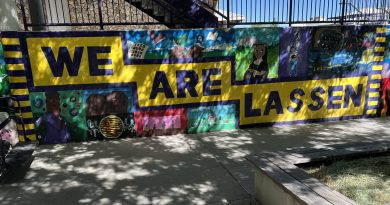
16th annual Susanville Indian Rancheria Powwow held this weekend at Lassen Community College
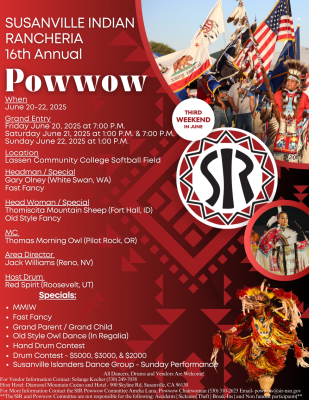
Indigenous people from all across the West Coast gather with Lassen County residents this weekend at the Lassen Community College softball field for the 16th annual Susanville Indian Rancheria Powwow.
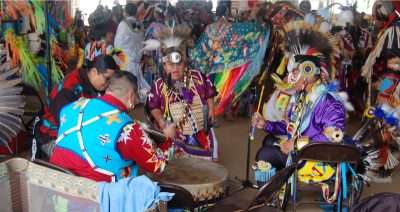 This drum group, performing at a previous Powwow, provides the beat and the song for the dancers.
There is no admission charge to attend this drug- and alcohol-free event with a Grand Entry at 7 p.m. Friday, June 20, 1 and 7 p.m. Saturday, June 21 and 1 p.m. Sunday, June 22.
Dry camping available, but there are no showers except at the SIR Tribal gym, 795 Joaquin Street, from 7 to 11 a.m. Saturday and Sunday only.
Jack Williams is the arena director, Thomas Morning Owl is the master of ceremonies and Red Spirit is the host drum.
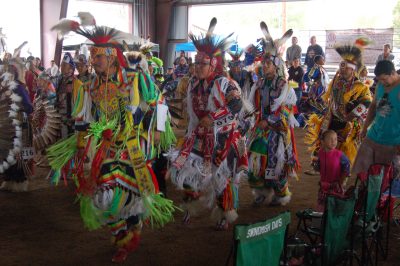 Native American dancers, clad in regalia, dance during the Grand Entry at the Susanville Indian Rancheria’s sixth annual Memorial Pow Wow held a decade ago.
Specials and dances at the powwow include
Missing and Murdered Indigenous Women, Fast Fancy, Grand Parent/Grand Child, Old Style Owl Dance (in regalia), Hand Drum Contest, Drum Contest and a Sunday performance by the Susanville Islanders Dance Group/
So what is a Pow Wow?
According to the SIR website, some believe that the war dance societies of the Ponca and other Southern Plains Tribes were the origin of the powwow. Another belief is that when the Native American tribes were forced onto reservations the government also forced them to dance for the public to come and see. Before each dance, they were led through the town in a parade, which was the beginning of the Grand Entry.
Today, Native American Powwows are organized by committees that work for weeks before the event. At the Powwow, the MC and Arena Director run the event. The MC works with the Arena Director to keep the Powwow organized and running smoothly. These two individuals along with the committee work hard to bring the people together to dance and fellowship together in the circle.
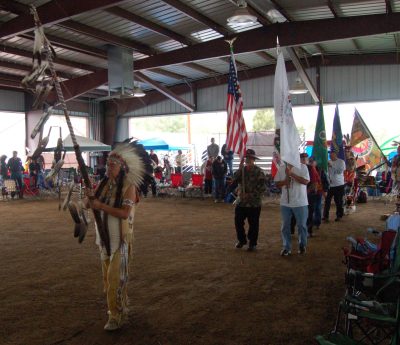 A color guard — comprised of Native American veterans — brings in the flags at the Powwow.
The American Indian Powwow begins with the Grand Entry. This is the entry of all the people entering the arena. This originally was a parade through the town the Powwow was in. Even today in some Powwow, these parades are still held. During the Grand Entry, everyone is asked to stand as the flags are brought into the arena.
The flags carried generally include the U.S. flag, Tribal flags, the POW flag, and the Eagle staff of various Native Nations present. These are usually carried by veterans. Native Americans hold the United States Flag in an honored position despite the horrible treatment received from this country.
The flag has a dual meaning. First, it is a way to remember all of the ancestors who fought against this country. It is also the symbol of the United States which Native Americans are now a part. The flag here also reminds people of those people who have fought for this country.
Following the veterans are other important guests of the powwow including tribal chiefs, princesses, elders and Powwow organizers.
Next, in line are the men dancers. The men are followed by the women dancers. Once everyone is in the arena, the song ends and a song is sung to honor the flags and the veterans.
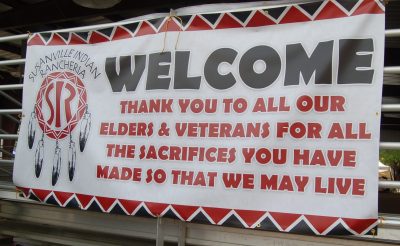 This sign welcomed visitors and thanks elders and veterans at a previous Powwow.
After a prayer, the dancing resumes, usually with a few round dances. After the round dances, intertribal dancing songs are sung and everyone dances to the beat of the drum. At contest Powwows, the dancers compete in dance and age categories for prizes.
Powwow singers are a very important part of the Native American culture. Without them, there would be no dancing. The songs are of many varieties, from religious to war to social.
As various tribes gathered together, they would share their songs, often changing the songs so singers of different tribes could join. With these changes came the use of “vocables” to replace the words of the old songs. Thus, some songs today are sung in “vocables” with no words.
Yet they still hold special meaning to those who know the song. Many songs are still sung in Native American languages either newly composed or revivals of old songs. These songs are reminders to the Indian people of their old ways and rich heritage.
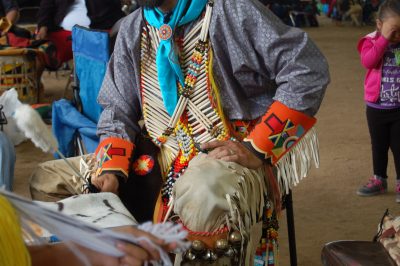 Some of the regalia worn by Pow Wow participants is nothing short of spectacular.
Powwow dances
Dances have always been a very important part of the life of the American Indian. Most dances seen at powwows today are social dances which might have had different meanings in earlier days. Although dance styles and content have changed, their meaning and importance have not. The outfits worn by the dancers, like the styles of clothing today evolve, it is not a stagnant culture, but a vibrant and changing way of life.
The dance styles seen most frequently at modern Powwows include Chicken, Grass, Fancy, Straight and Northern Traditional for the men. The women dance Buckskin, Cloth, Jingle, and Fancy Shawl.
 Hundreds of Native dancers and a large audience of Native and non-native peoples gathered for the 2019 PowWow at the Lassen County Fair Grounds.
For more information, call Powwow Chairwoman Amelia Luna at (530) 310-2623 or email powwow@sir-nsn.gov.