Newsom announces $1.1 billion in zero-emission transit, safer roadways and resilient infrastructure
Today, California Governor Gavin Newsom announced that the California Transportation Commission approved $1.1 billion to fund new zero-emission buses, charging stations and related infrastructure, as well as investments to restore aging bridges, improve highway safety, and increase mobility on local streets. Guided by the governor’s Build More, Faster – For All infrastructure agenda, these improvements will make California communities safer and more climate resilient.
 Gavin Newsom.
“Donald Trump is asleep at the wheel on America’s infrastructure,” Newsom said. “Meanwhile, California is moving forward. We are investing in zero-emission transit, safer roads and resilient infrastructure. That’s what Build More, Faster is all about: good-paying jobs and investments in our communities while delivering on our world-leading climate goals. Californians won’t wait for Washington to get its act together. We’re moving forward.”
Building California’s future
Among today’s approved investments is $53 million to purchase 12 clean energy locomotives to replace older diesel engines across Southern California’s Metrolink system. Approximately $57 million will be spent to repair a section of Highway 1 near Lucia damaged by slides in last winter’s storms and $9.5 million will help build a mobility center in Santa Maria that will serve as a hub for regional, clean-energy buses.
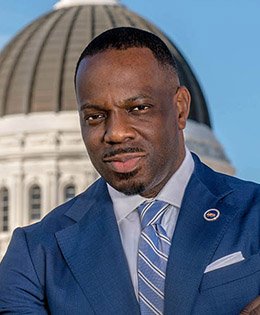 Toks Omishakin.
“Today’s investments show what it looks like when California chooses to lead with both urgency and intention,” said California Transportation Secretary Toks Omishakin. “By expanding zero-emission options and strengthening infrastructure in every corner of the state, we are delivering on Governor Newsom’s vision to build a modern, sustainable transportation system for all.”
 Dina El-Tawansy.
“The significant investments made today and throughout the year support Caltrans’ ongoing response to the effects of climate conditions on key assets, increased demand on the transportation system, and our continued efforts to enhance mobility for all users,” said Caltrans Director Dina El-Tawansy.
 Darnell Grisby.
“We are pleased to partner with Caltrans to enhance the economic competitiveness of our state and make commuting more affordable, while protecting our environment,” said California Transportation Commission Chair Darnell Grisby.
Other notable state projects include:
● $15 million to replace the historic Seventh Street Bridge in Modesto.
● $13 million to restore parts of State Route 38 in San Bernardino County damaged by the El Dorado Fire.
● $839,000 to construct bike lanes and improve sidewalks on South Avenue in Orange Cove, Fresno County.
District 2 Projects include:
• Corral Bottom Disposal Site Slide Repair & Stabilization (Highway 299 at Corral Bottom Road – Big Bar, Trinity County): Slide Repair and stabilization work. Includes $6.62 million in SB 1 funding.
• Hilt Pavement Rehabilitation (Interstate 5, from Klamath River Bridge and Separation No. 02-0134R to Oregon State Line – Near Hornbrook, Siskiyou County): Pavement resurfacing and restoration (2R). Includes $3.54 million in SB 1 funding.
• Antlers Bridge Joint Seal Director’s Order (Interstate 5 at Antlers Bridge – near Lakehead, Shasta County): Bridge joint replacement. Includes $3.73 million in SB 1 funding.
• Sweetbriar Deck Replacement (Interstate 5 at Sweetbriar Overcrossing #06-0115 (near Castella, Shasta County): Bridge Rehabilitation and replacement. Includes $1.19 million in SB 1 funding.
For more information about transportation and other infrastructure projects funded with state and federal investments, visit build.ca.gov.
Putting dollars to work
Of the total allocation this month, $463 million has come via Senate Bill 1, the Road Repair and Accountability Act of 2017, and $190 million from the 2021 federal Infrastructure Investment and Jobs Act.
SB 1 has invested approximately $5 billion annually toward transportation projects since 2017. It provides funding split between the state and local agencies. Road projects progress through construction phases more quickly, depending on the availability of funds, including those partially funded by SB 1.
California is expected to receive nearly $42 billion in federal infrastructure funding over a span of five years. These investments will upgrade the state’s roads, bridges, rail, public transit, airports, ports, and the electric vehicle charging network.
The gold standard for American EV infrastructure
California is tearing down barriers to ZEV deployment, speeding up EV charging station installations, and deploying infrastructure in hard-to-reach and low-income areas.
While qualifying for federal ZEV incentives contributed to the sales spike this quarter, becoming an EV driver in California is increasingly getting easier. There are now more than 200,000 publicly accessible EV charging stations statewide. EV chargers can be found at grocery stores, park-and-ride lots, and even gas stations, whereas shared EV chargers can be found at apartment complexes, workplaces, doctors’ offices, sports facilities, and other parking areas with some level of restricted access. This statewide network of public and shared private EV chargers is in addition to the estimated 800,000 EV chargers installed in single-family homes.
California’s climate leadership
Pollution is down, and the economy is up. Greenhouse gas emissions in California are down 21 percent since 2000 — even as the state’s GDP increased 81 percent in that same time period, all while becoming the world’s fourth largest economy.
California also continues to set clean energy records. In 2023, the state was powered by two-thirds clean energy, making it the largest economy in the world to achieve this level. California has also run on 100 percent clean electricity for part of the day almost every day this year.
Since the beginning of the Newsom administration, battery storage has surged to nearly 17,000 megawatts — a more than 2,100 percent increase, and more than 30,000 megawatts of new resources have been added to the electric grid. California now has 33 percent of the storage capacity estimated to be needed by 2045 to reach 100 percent clean electricity.