Priority locations selected for Highway 395 Wildlife Overcrossing Project to be discussed at a Wednesday evening meeting in Doyle

According to a statement by Gillian Roy, California Program Coordinator for the Wildlands Network, the U.S. 395 Wildlife Overcrossing Project, a collaborative effort between the Lassen County Transportation Commission, Wildlands Network, Mark Thomas Engineering and Dudek, reached a significant milestone with the selection of six priority locations under consideration for the construction of a new wildlife overcrossing on Highway 395 in Lassen County.
This achievement marks a crucial step in the project’s mission to reconnect essential mule deer migration corridors and enhance road safety along this critical stretch of highway. Community members are invited to share their input on the proposed sites at a public meeting scheduled for 6 p.m. Wednesday, May 14 at the Doyle Community Center as part of Lassen County District 5 Supervisor Jason Ingram’s Town Hall.

Roy’s release initially reported the meeting would be held at 7 p.m. tonight, Monday, May 12, but that information is incorrect. the meeting will be held Wednesday evening.
In 2023, the Lassen County Transportation Commission received a $5.4 million grant from the Wildlife Conservation Board to support planning and design efforts for one wildlife overcrossing on Highway 395. The project has two primary goals: to improve landscape connectivity — particularly for migratory mule deer — across U.S. 395 and to reduce wildlife-vehicle collisions, which pose a serious risk to both animals and motorists. The project area, which includes the section of Highway 395 from the California-Nevada border to Susanville, bisects critical habitat for mule deer, pronghorn, badgers, mountain lions and other species. This region also has one of the highest rates of deer-vehicle collisions in California. By improving habitat connectivity through a dedicated wildlife crossing, the project aims to reduce these dangerous collisions, restore migratory pathways, and enhance biodiversity in the region.
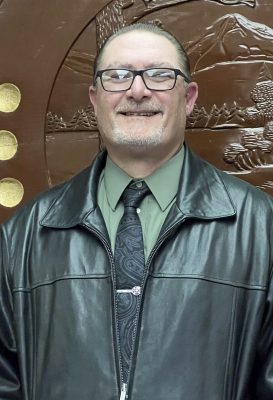 Jason Ingram.
“Highway 395 is one of the most dangerous corridors for motorists and wildlife in California,” said John Clerici, executive secretary of the Lassen County Transportation Commission. “By identifying these six priority locations, we are advancing solutions to reduce wildlife-vehicle collisions while restoring critical migration routes for species like mule deer. We are excited to engage with the public, hear their feedback on these proposed sites, and work together to create safer roadways for people and wildlife.”
After an extensive scientific modeling process, the project team identified six priority locations — one of which will ultimately be selected for eventual construction. The model considered multiple factors, including wildlife habitat suitability, roadkill records, GPS tracking of key species, and land use analysis, to identify the most effective sites for a wildlife crossing. Final site selection will depend on community feedback and engineering feasibility.

This modeling builds on years of California Department of Fish and Wildlife’s deer collaring, Caltrans’ roadkill data collection, and Wildlands Network’s camera and roadkill studies conducted by Pathways for Wildlife, which provided valuable data on wildlife movement patterns and collision hotspots.
The six priority locations identified for potential wildlife crossing infrastructure include the Bass Hill Wildlife Area, Milford, South of Honey Lake, the Doyle Wildlife Refuge, Red Rock and Hallelujah Junction.
“The U.S. 395 Wildlife Overcrossing Project is a critical investment in protecting both public safety and wildlife,” said Mari Galloway, California Program Director of Wildlands Network. “By reconnecting fragmented habitats across U.S. 395, we can support healthy animal populations and reduce the number of dangerous wildlife-vehicle collisions.”
 The U.S. 395 Wildlife Overcrossing Project is collaborating with local landowners, wildlife experts, community members and others to gather feedback on the six priority locations.
These discussions, along with detailed engineering feasibility assessments, will determine the most suitable site for construction.
Members of the public interested in providing feedback on the proposed locations are invited to attend the Doyle Community Center meeting tonight.
Research shows that wildlife crossings, when combined with wildlife fencing, can reduce wildlife-vehicle collisions by more than 90 percent. Given the high level of wildlife-vehicle collisions in the area, the project team is also working with Caltrans to advance additional wildlife undercrossings along the Highway 395 corridor and partnering with local organizations to support habitat restoration for migratory mule deer in Lassen County.
For more information about the U.S. 395 Wildlife Overcrossing Project and future updates, visit lassenctc.com/wildlife-overcrossing.

According to the Lassen County Transportation Commission’s website
Project overview
The section of Highway 395 that runs from the California-Nevada border to Susanville has a high occurrence of wildlife-vehicle collisions and impedes important wildlife movement for deer, elk, pronghorn, and bisects known deer migration corridors.
The US 395 Wildlife Crossing Project seeks to increase safe passage for wildlife and reduce wildlife-vehicle collisions. From 2023-2027, the US 395 Wildlife Crossing Project will study and design locations for wildlife crossing structures on Highway 395 to reduce-wildlife vehicle collisions.

Highway 395 currently has three wildlife underpasses, and California Department of Transportation has installed directional wildlife fencing and jump outs in various locations in the project area. Wildlands Network has been studying the project area, conducted by Pathways for Wildlife, to help determine what locations on the highway would benefit from wildlife enhancements, like culvert replacements, bridge retrofits, the construction of underpasses and overpasses, and directional fencing.
The problem
Mule deer account for 74 percent of wildlife-vehicle collisions on the highway. Highway 395 is the sixth worst deer-vehicle hotspot in the state. Two of 12 of California Department of Fish and Wildlife’s ’s top priority barriers in the state are located on Highway 395.

The solution
Highway underpasses and overpasses, coupled with fencing, can reduce crashes by 80-90 percent, making roads safer for people and wildlife.
In August 2023, the Wildlife Conservation Board granted the Lassen County Transportation Commission $5,375,000 to plan and design the most effective location for a wildlife overpass(es) and/or underpass(es) within the project area. The four-year grant will aim to get wildlife crossing structures to prepare 65 percent Plan, Specification, and Estimates per Caltrans standards.

Next steps
Pathways for Wildlife will continue to collect data in the project area. The Team will investigate and provide alternatives for the wildlife crossing location based on environmental and right-of-way constraints and constructability of each location. Conceptual drawings will be developed in Spring 2024, and Caltrans environmental documenting and review will continue through the project period.