
Today is World Suicide Prevention Day: Where do Americans suffer from mental health issues the most?
According to a statement from docva.com, since the pandemic, Louisiana residents have suffered from mental health issues the most, with 38.2 percent affected. Mississippi is in second place, where 37.5 percent of people have had symptoms of anxiety or depression since 2020, and Oklahoma is third with 36.9 percent. California is in 10th place, where 34.9 percent of all residents have had mental health issues after the pandemic
According to the statement, a new study has revealed the states where residents’ mental health has been the poorest since the pandemic, with Louisiana topping the ranking.
For World Suicide Prevention Day, virtual medical assistants, DocVA, have gathered data on anxiety and depression from the CDC to analyze the changes in mental health issues in each state since 2020. They calculated the average percentage of people suffering from symptoms of anxiety or depression from 2020 to 2024 and ranked the states in order of highest to lowest.
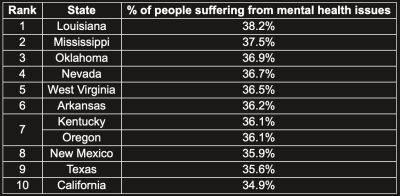 Top 10: States with the most mental health issues since 2020.
Louisiana is in first place, where a staggering 38.2 percent of all residents have experienced symptoms of anxiety or depressive disorder since 2020, like feeling nervous or hopeless, not being able to stop or control worrying, and having little pleasure or enjoyment doing anything.
In second place is Mississippi, where 37.5 percent of all people have had some form of mental health issues since the coronavirus outbreak.
Third place belongs to Oklahoma, as 36.9 percent of residents have reported issues with their mental health between 2020 and 2024.
Nevada takes fourth place, with 36.7 percen of people suffering from symptoms of anxiety or depression since COVID-19.
In fifth place, a shocking 36.5 percent of people in West Virginia have reported mental health issues since the pandemic.
Since COVID-19, 36.2 percent of Arkansas residents have suffered from mental health issues like feeling down, depressed, or on edge from several days a week to every day of the week.
Kentucky and Oregon have tied in seventh place, both with 36.1 percent of residents experiencing anxiety or depression since 2020.
In eighth place is New Mexico, where an average of 35.9 percent of people have had mental health issues since the pandemic.
In Texas, a staggering average of 35.6 percent of residents have had symptoms of anxiety or depressive disorder after the pandemic.
Finally, California is in 10th place, where 34.9 percent of people have suffered from poor mental health after the coronavirus outbreak.
Nathan Barz, Founder and CEO of DocVA, commented on the findings.
“The pandemic has profoundly impacted mental health, highlighting the importance of resilience and adaptability in times of crisis, he said. “During the pandemic, feelings of isolation and uncertainty surged, leading to increased anxiety and depression for many.
“As we navigate the aftermath, it’s crucial to prioritize mental well-being, recognizing that healing takes time and support. The isolating and unfamiliar experience of the pandemic, as well as these findings, has highlighted the need for accessible mental health resources and the value of human connection, especially when overcoming collective trauma.”
Methodology
This study examined data from the Anxiety and Depression Household Pulse Survey, covering the years 2020 to 2024, to determine which state was most impacted by mental health issues on average. The analysis centered on estimated percentages of adults reporting symptoms related to generalized anxiety disorder or depressive disorder during the last seven days and calculated per state the average percentage of people who have experienced mental health issues in this period.
According to the World Health Organization, “Suicide is a major public health challenge, with more than 700 000 deaths each year globally. Each suicide has far-reaching social, emotional, and economic consequences, and deeply affects individuals and communities worldwide.
“The triennial theme for World Suicide Prevention Day for 2024-2026 is ‘Changing the Narrative on Suicide’ with the call to action ‘Start the Conversation.’ This theme aims to raise awareness about the importance of reducing stigma and encouraging open conversations to prevent suicides. Changing the narrative on suicide is about transforming how we perceive this complex issue and shifting from a culture of silence and stigma to one of openness, understanding, and support.
“The call to action encourages everyone to start the conversation on suicide and suicide prevention. Every conversation, no matter how small, contributes to a supportive and understanding society. By initiating these vital conversations, we can break down barriers, raise awareness, and create better cultures of support.
This theme also emphasizes the need to prioritize suicide prevention and mental health in policy making, calling for government action. Changing the narrative requires advocating for policies that prioritize mental health, increase access to care, and provide support for those in need.
“World Suicide Prevention Day was established in 2003 by the International Association for Suicide Prevention in conjunction with the World Health Organization. Sept. 10th each year aims to focus attention on the issue, reduces stigma and raises awareness among organizations, governments and the public, giving a singular message that suicides are preventable.”
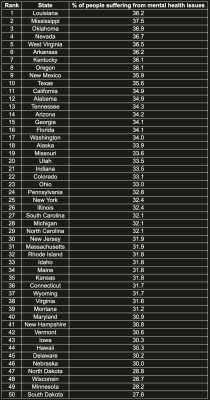 Full ranking of states with the most mental health issues since 2020.