Tuesday, Jan. 21, 2014 • Supervisors hear Williamson Act protests
Publisher’s note: This story originally appeared in the Tuesday, Jan, 21, 2014 edition of the Lassen County Times.
To comply with a policy adopted by the Lassen County Board of Supervisors, non-renewal notices were sent to 43 Williamson Act contract holders with those receiving notices allowed to protest the notification.
The Lassen County Policies and Procedures of the Land Conservation Act of 1965 directs staff to file non-renewals for all contracts that enter into conservation easements on all or some of the restricted land owned by contract holders.
The policy, adopted in October 2012, also requires 100 acres of irrigated land or 400 acres of non-irrigated land.
According to Gaylon Norwood, assistant director of planning and building services, out of the notices sent, 30 were issued due to acreage issues and 13 were non-renewed because they are on conservation easements.
The supervisors held a hearing in December to hear protests for 12 contracts.
According to Norwood, staff has received additional protests and more hearings will be scheduled.
The California Land Conservation Act of 1965, or the Williamson Act, allows local agencies and land owners to enter into contracts that reduce the property tax assessed value on agricultural land which in turn are restricted to agriculture use only.
Up until 2009, the state made subvention payments to local governments to provide for the partial replacement of local property tax revenue as a result of the participation in the Williamson Act.
To deal with a budget deficit, Governor Arnold Schwarzenegger eliminated all of the state funding for the Williamson Act in 2009.
According to Norwood, the state decided it didn’t want to fund the program anymore and forced counties to face the hard truth and decide what kind of standards it would like to have and where to tighten up a little bit.
He said other counties have responded a lot of different ways from getting out of program entirely or doing nothing.
In December, the supervisors withdrew non-renewal notices for the Kramer Ranch that requested 341.9 acres located on a conservation easement be removed from the Williamson Act. The remaining 4,067 acres will still remain in the program.
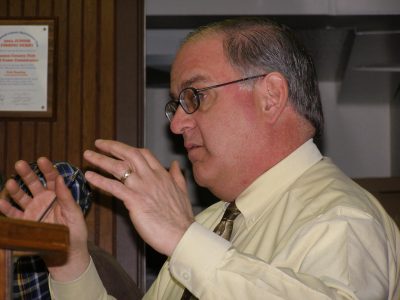 Lassen County Supervisor Jim Chapman.
Withdrawal notices were also approved for Wemple Ranch, which has 39 acres on a conservation easement but 2,160.36 acres meeting the program requirements, and Cheryl and Virgile Anderson “upon the assurance of the property owner they plan on maintaining viable irrigation activity,” according to supervisor Jim Chapman said.
In addition, a non-renewal notice for Messerli Farms was reversed. It has 97 acres of irrigated land, but did not meet the 100 acres as adopted by the board.
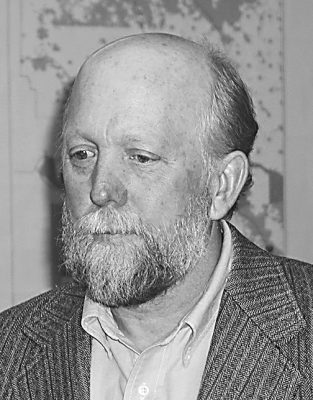 Lassen County Assessor Ken Bunch.
According to Lassen County Assessor Ken Bunch, Messerli Farms does have adequate irrigation system for more than 100 acres and is leasing adjacent ground in the non-renewal process
However, Chapman asked if 97 is close to 100, then is 95 closer to 100?
“At what point do we stop shaving off and drawing that line?” He asked. “I have no problem with 97, but at some point there’s going to be rock bottom …,” he said.
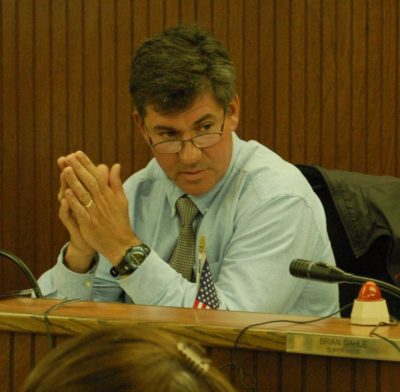 Lassen County Supervisor Larry Wosick.
Supervisor Larry Wosick said when the board set the criteria it realized specific contracts might not meet the criteria, but will be part of an overall farming operation, which appeared to be the case with Messerli Farms.
The supervisors also approved withdrawing a notice of non-renewal on Pete’s Valley Ranch and Wood Cattle Ranch. The board did, however, agree non-renewal notices were appropriate for two separate contracts belonging to the Darrell and Callie Wood family as the contracts did not meet the 100 acres of irrigated land requirements and remaining property is located on conservation easements.
Wosick expressed his appreciation to staff for all of its work and to the contract holders who attended the meeting.
He said, “I know it’s a pain for the contract holders to have to come here again, but this is just one of the necessary steps to cleaning up this Williamson Act and getting the program manageable and making sure that those who still do have a contract, especially with the absence of the state subvention funding, that those contract holders are legitimate agricultural concerns. We’re just about there. This is one of the last pieces of business …”