Tuesday, July 30, 2013 • Janesville resident dismisses $1 million civil rights suit
Publisher’s note: This story originally appeared in the Tuesday, July 30, 2013 edition of the Lassen County Times.
The Susanville City Council continues to discuss a claim for damages filed by Janesville resident Jordan Drury in closed session even though it rejected his claim in December and Drury dismissed a federal civil rights lawsuit last month. The council met with legal counsel to discuss the claim during closed session at several recent meetings, but the council has not reported taking any action on the matter.
 Eigene Chittock.
According to court documents from the U.S. District Court, Eastern District of California, Susanville attorney Eugene Chittock filed a $1 million civil rights lawsuit April 15 against two Susanville police officers, the city of Susanville and as many as 10 unnamed individuals.
Drury alleges his civil rights were violated when the two officers — Michael Milito and Tyler Olsen — assaulted, battered, falsely arrested and falsely imprisoned him following a confrontation in front of a Gay Street residence in Susanville during a party May 16, 2012. The two officers allegedly used excessive force when they repeatedly used their department-issued tasers while taking Drury into custody.
According to the court documents, Drury later dismissed the court action “with prejudice and in its entirety” with the advice of counsel June 19.
According to the press release from the Susanville Police Department in May, after officers responded to a citizen’s complaint, they asked Drury to leave the residence because he did not live there. Drury refused to comply, and a verbal exchange with the officers ensued. As the officers attempted to place Drury under arrest, he allegedly resisted, resulting in a physical altercation.
Drury, 24, and Manuel Raul Faustino, 21, of Susanville were arrested outside the party at the Gay Street residence.
Drury was charged with felony resisting arrest and Faustino was charged with interfering with officers as they arrested Drury.
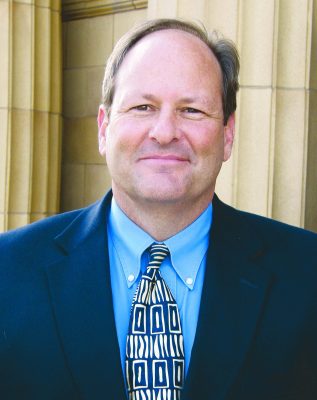 Lassen County District Attorney
Bob Burns.
In the hours after Drury’s arrest, Lassen County District attorney Robert Burns ordered his release from custody and rejected the felony charge.
The district attorney’s office investigated the case as a misdemeanor offense, but in August Burns said after a review of all the evidence in the case he decided there is “insufficient evidence to sustain a conviction and successful prosecution is unlikely,” and dismissed all charges against Drury.
Burns declined to prosecute the case against Faustino as well.
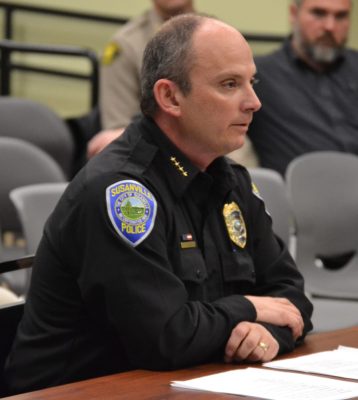 Susanville Police Chief Tom Downing.
In September, Tom Downing, Susanville’s chief of police, announced Molito had resigned, but he couldn’t provide any additional information because the contents of Molito’s personnel file are confidential.
Just after the incident, Downing told the newspaper, “I’ve placed one of my officers on paid administrative leave, and I’ve hired an outside investigative firm that’s going to investigate this incident to the fullest and make a recommendation to me. I can’t make any further comment because it’s a personnel matter.”
At the time Downing said outside, independent investigators are often used in cases such as this one that might tend to erode the public confidence in a law enforcement agency.
“I got a letter from Mr. Downing yesterday,” Drury told the newspaper last Sept. 20, “that said the investigation had proved they (the arresting officers) had used excessive force, but he (Downing) wasn’t allowed to tell me what actions had been taken against the police officers.”
Drury said he just wants to make sure other citizens don’t have to go through an experience similar to his.
“I would like the police department to tell the public what action they’re taking to make sure this doesn’t happen again,” Drury said. “I know there’s nothing they can do to make sure it doesn’t happen again, but it would be nice to know what they’re doing to try and make sure it doesn’t happen again.”
New information from the court file
According to Drury’s lawsuit, when the officers arrived at a going away party for a Lassen Community College student from Brazil, he went outside to meet with them and tell them some of those present at the party, all over the age of 21, had been drinking and it would not be safe for them to leave the party.
As he tried to go back inside, Drury alleges Molito seized him from behind and shoved him head first into the porch, and “repeatedly smashed plaintiff’s face in the pavement by striking him in the back of the head with a closed fist.”
Olsen allegedly assisted Molito in pinning Drury to the ground and beating him some more.
Molito allegedly “grabbed plaintiff by the throat and attempted to crush his windpipe.”
Drury said he did not resist the officers in any way, he could not breathe, “and the force used against him was unnecessary, unreasonable and excessive.”
Drury was arrested on charges of public drunkenness and resisting arrest. He said he repeatedly asked officers to administer a breathalyzer test because he had not been drinking. They refused. He was transported to Banner Lassen Medical Center for X-rays and then to the Lassen County Detention Center where a breathalyzer test was administered. According to the test, Drury had no alcohol in his system.
According to the court documents, Drury suffered “lacerations, scrapes and bruises to his face, neck, back, chest, arm and legs” as a result of the officers’ actions. He endured “pain and suffering, emotional distress, loss of reputation and standing in the community and medical expenses (including damage to plaintiff’s credit occasioned by the bill for the hospital visit).”
Drury alleges the officers violated his Fourth and 14th Amendment rights to be free from unreasonable search and seizure, loss of physical liberty as well as pain and suffering and emotional trauma and suffering.
The city of Susanville allegedly “developed and maintained policies or customs exhibiting deliberate indifference to the constitutional rights of persons in Susanville.”
The city also allegedly “inadequately supervised and trained its officers” and they (Molito and Olsen) “believed that their actions would not be properly monitored by supervisory officers and that misconduct would not be investigated or sanctioned, but would be tolerated.”