Tuesday, Nov 11, 2011 • Utility district moves Horse Lake project forward
At its Tuesday, Oct. 25 meeting, the Lassen Municipal Utility District’s Board of Directors unanimously approved four agreements that will begin the environmental process for the proposed Invenergy Horse Lake Wind Farm.
 Jay Dow.
Ward 5 Director Jay Dow made the motion to approve the four agreements — a CEQA Indemnity Agreement between Horse Lake Wind Energy, LLC and LMUD; a Memorandum of Understanding between Horse Lake Wind Energy, LLC, the U.S. Department of the Interior (the Bureau of Land Management) and LMUD; an Agreement for Cost and Fee Reimbursement for preparation of an Environmental Impact Report between Horse Lake Wind Energy, LLC and LMUD; and a General Agreement for Cost and Fee Reimbursement between LMUD and Horse Lake Wind Energy. Ward 1 Director Fred Nagel seconded the motion.
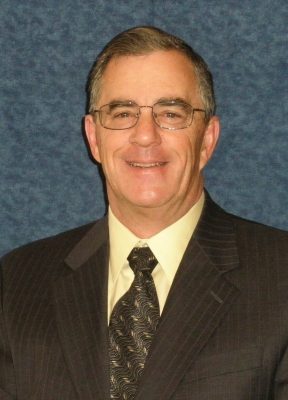 Bill Stewart.
As the board began its discussion of the four agreements, General Manager Bill Stewart said, “We will be asked to be the lead agency on the California Environmental Quality Act with regard to Horse Lake Wind Energy. This would be a cooperative effort under the Memorandum of Understanding (MOU) with the Bureau of Land Management (BLM). We would enter into an MOU with BLM and use the same CEQA consultant to do all the things that CEQA folk do.”
Stewart said BLM would be the lead agency on the National Environment Policy Act process.
“Why are we the lead agency here?” Dow asked.
“Because we have entered into a large generator interconnection agreement with them (Invenrgy) and it just seems appropriate that we be the lead,” Stewart said.
“And what resources is that going to consume of ours?” Dow asked.
 Should Invenergy’s 51-megawatt Horse Lake Wind Farm pass environmental scrutiny and earn final approval from the Bureau of Land Management, wind turbines such as these could be seen along the crest of Fredonyer Peak.
“None,” Stewart replied. “One of the agreements is an absolute cost indemnification.”
Stewart said the district would be paid for every cost associated with the process, including staff time.
Dow said he understood that, but the publicly owned utility district’s senior staff has a finite number of hours to work each day, and Dow wondered if the project might be too large.
“We are an expert in the process,” Stewart said, “so that together with BLM we would agree on a consultant who would be hired and paid for by Horse Lake, directed by us and BLM, BLM possibly being the lead on that because they have experience in those matters.”
“My only concern is, we’re going to sub this out, basically,” Dow said.
“Correct,” Stewart responded.
“They’re going to pay for it,” Dow said. “I see they’re going to have a retainer at least on some of these agreements we’re going to be working off of, so there’s always going to be a pool of liability.”
“Correct,” Stewart said, “and that was part of my insistence that we always be working off their money and not off ours.”
Stewart said LMUD would need approval through the CEQA process for the new transmission lines that would carry the Wind Lake Horse Farm’s energy, and the NEPA process would cover the environmental issues regarding the wind turbines on BLM land.
The transmission lines would run across both public and private land.
 Eugene Chittock.
Gene Chittock, the district’s legal counsel, advised the board it might want to approve all four agreements at one time.
“I think it would be more appropriate to discuss the four documents and make one vote,” Chittock said. “They do work hand in hand.”
“Well, I just want to make sure it’s not going to tax our resources here,” Dow said.
Stewart said the district staff will expend time on the process, but how much depends upon the quality of the consultant group that is hired. He expects BLM will engage qualified consultants it’s worked with in the past.
BLM accepted the Horse Lake Wind Farm’s development plan for a 51-megawatt wind farm in February.
At that time, Jeff Fontana, a public information officer for BLM, said the agency’s acceptance of the development plan starts “the internal process” necessary for the agency to move the project forward, but he added the acceptance of the plan is not an approval of the project — it simply means the developer has met the requirements that need to be addressed before the project undergoes an extensive public environmental review process expected to begin in late summer or early fall. He said the public would have many opportunities to comment during this process.
Once the BLM has completed its internal work on the project, Fontana said in February, it will file a Notice of Intent to Prepare an Environmental Impact Statement. That filing launches the public review process.